
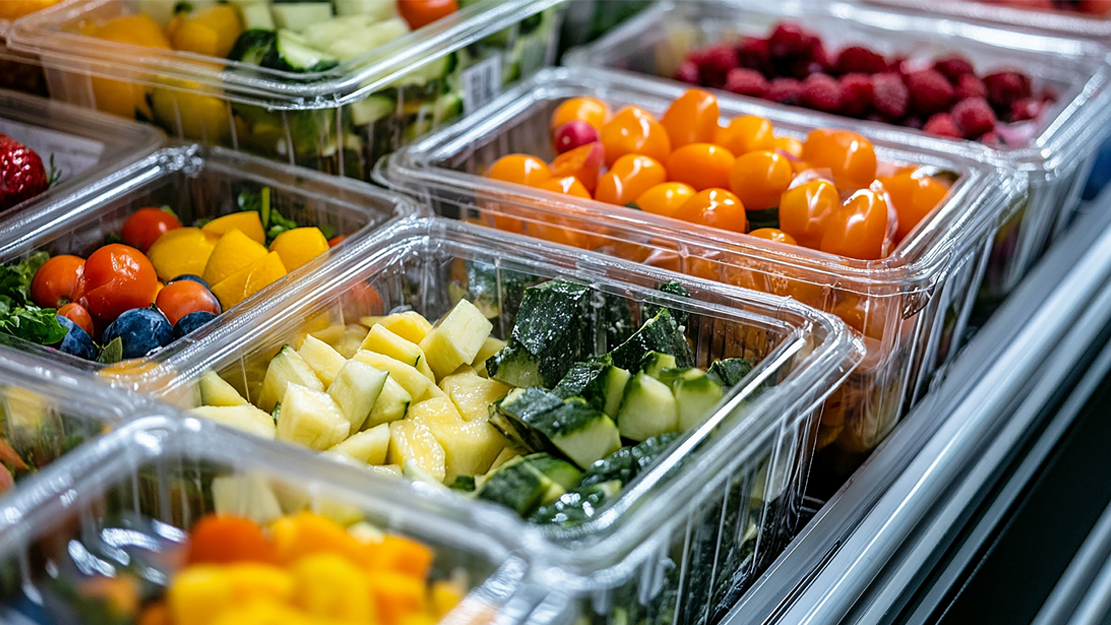
While many ready-made options are high in saturated fat, salt and sugar, there are ways to build nutritious meals using convenient supermarket choices.
The key is knowing what to look for. With smart selections and a few simple additions, you can create balanced, healthy meals that support your wellbeing without spending hours in the kitchen.
What you will learn in this fact sheet
This fact sheet provides practical guidance for choosing healthy convenience meals.
- How to build a balanced meal using convenient options.
- What to look for when choosing ready-made meals.
- Recommended convenience meal brands.
- Tips for boosting nutrition with simple additions.
Building a balanced convenience meal
Follow the portion plate model when assembling convenience meals: half vegetables, quarter protein, quarter carbohydrate.
Bulk up on vegetables (½ your plate)
Aim for half your plate to be vegetables. Easy convenience options include:
- Prepared salad packs.
- Pre-chopped vegetable packs.
- Frozen vegetables.
- Fresh vegetables.
- Pre-cut vegetable sticks
Choose lean protein (¼ your plate)
Aim for a quarter of your plate to be protein. Convenient options include:
Canned options
- Sardines, salmon or tuna in spring water.
- Chicken in spring water.
- Legumes and lentils.
Frozen options
- Fish fillets.
- Chicken breast.
- Pre-marinated proteins.
Refrigerated options
- Eggs.
- Pre-cooked chicken.
- Tofu.
- Cottage cheese.
Aim for a minimum of 15 grams of protein per main meal.
Add lower GI carbohydrate (¼ your plate)
Complete your plate with a quarter of lower glycaemic index carbohydrate:
- Microwave basmati rice or quinoa.
- Canned corn, legumes or lentils.
- Wholegrain or multigrain bread.
- Instant grain bowls (tabbouleh, lentils).
- Microwave wholemeal pasta.
Supporting vital nutrition research
This evidence-based fact sheet was developed by the Baker Heart and Diabetes Institute, where dietitians and researchers have been advancing practical nutrition guidance for decades.
Help us continue providing free, expert health resources. Your support enables us to:
- Develop more comprehensive fact sheets like this one.
- Conduct research that informs better nutrition choices.
- Make evidence-based health information freely accessible to all Australians.
Support our research and free resources
Your donation helps ensure we can continue creating and updating valuable health guides for the community.
Choosing healthy ready-made meals
When selecting ready-made meals, use these criteria to identify the healthiest options:
Energy: 1700kJ or less per serve.
Carbohydrate: 30–50g per serve, preferably lower GI carbohydrate.
Saturated fat: 2g or less per 100g.
Sodium: 400mg or less per 100g.
Vegetables: At least half the meal should be vegetables (add extra if needed).
Protein: Minimum 15g per main meal.
Recommended convenience meal options
From the shelf
Soups
- Amy's Kitchen Organic Soup Range.
- La Zuppa Soup and Rice Pouch Range.
- FodMapped For You Soup Range.
- Campbells Country Ladle and Chunky Ranger ranges.
Meals
- John West Protein Plus meals.
- Sirena Ready to Eat range.
- Woolworths Tuna and rice/pasta range.
From the fridge
- Dari's soup range.
- Pitango.
- Strength Meals Co.
From the freezer
- Coles Perform Lean range.
- Dineamic.
- Lean Cuisine.
- Super Nature Super Pulses and Wellness Bowls ranges.
- Weight Watchers.
Online meal ordering and meal kits
Many services offer convenient meal delivery and meal kits. Options include Be Fit Food, YouFoodz, Marley Spoon, HelloFresh, Thrive, My Muscle Chef and Lite n' Easy.
As these meals change regularly, we cannot recommend specific options. Use the label reading criteria taught in this fact sheet to assess meals and meal kit recipes to choose the healthiest options available.