
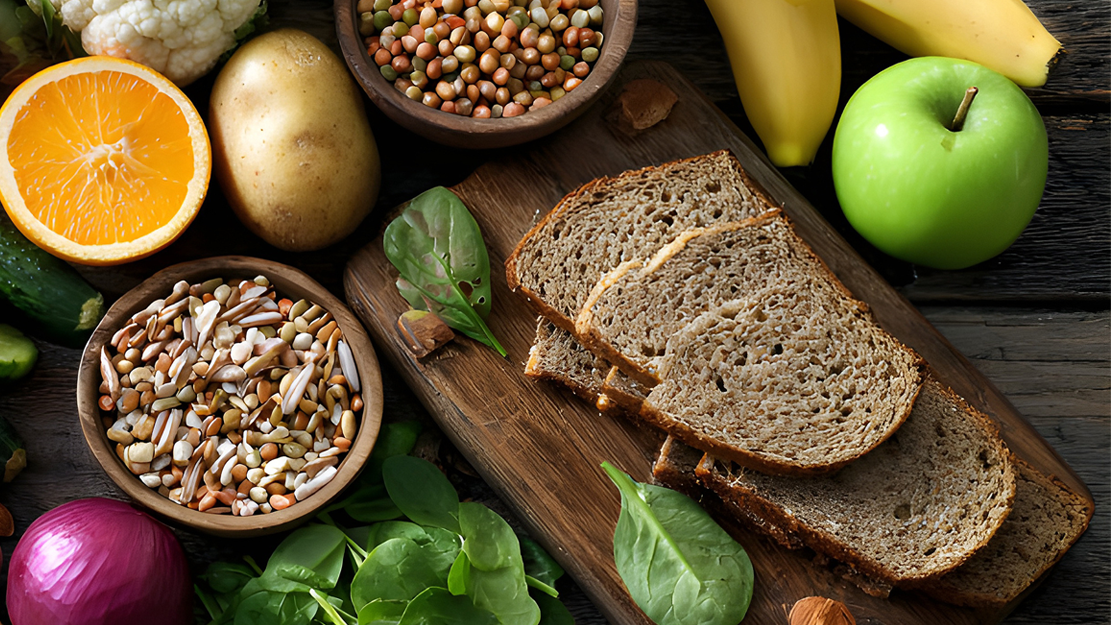
Eating a range of high-fibre foods offers significant benefits for your overall health and wellbeing.
Most Australians don't get enough fibre. Aiming for at least 25–30 grams daily can improve your heart health, help manage blood glucose levels, support healthy weight and promote good bowel function.
What you will learn in this fact sheet
This fact sheet provides practical guidance on increasing dietary fibre.
- Health benefits of dietary fibre for diabetes, heart and bowel health.
- The three types of fibre and where to find them.
- Daily fibre targets and how to achieve them.
- Reading food labels to identify high-fibre choices.
Health benefits of dietary fibre
Diabetes and heart health
- Lowers your chance of developing type 2 diabetes and heart disease.
- Improves blood glucose levels if you have diabetes.
- Reduces unhealthy cholesterol levels, especially soluble fibre.
Body weight
- Improves appetite control by making you feel fuller after eating.
Bowel health
- Reduces your risk of diverticular disease, haemorrhoids and bowel cancer.
- Improves bowel health in different ways:
- Soluble fibre absorbs water, slows digestion and softens bowel motions.
- Insoluble fibre adds bulk and helps push bowel motions through.
- Resistant starch feeds good bacteria in your bowel.
Types of dietary fibre
Soluble fibre
Food sources:
- oats
- psyllium husk
- seeds
- lentils and legumes
- barley
- vegetable and fruit flesh
- Benefibre and Metamucil.
Ways to include:
- Choose porridge for breakfast.
- Add psyllium or chia seeds to smoothies.
- Mix lentils with minced meat.
- Add barley to homemade soups.
- Eat 5 serves of vegetables and 2 serves of fruit each day.
Insoluble fibre
Food sources:
- wholegrain flour and bread
- wholegrain cereals and grains
- wheat bran and rice bran
- nuts
- vegetable and fruit skin.
Ways to include:
- Choose multigrain bread.
- Swap cornflakes for All-Bran.
- Add rice bran to bread or muffin recipes.
- Snack on 15 almonds.
- Eat the skin on vegetables and fruit.
Supporting vital nutrition research
This evidence-based fact sheet was developed by the Baker Heart and Diabetes Institute, where dietitians and researchers have been advancing understanding of nutrition and health for decades.
Help us continue providing free, expert health resources. Your support enables us to:
- Develop more comprehensive fact sheets like this one.
- Conduct research that informs better nutrition guidance.
- Make evidence-based health information freely accessible to all Australians.
Support our research and free resources
Your donation helps ensure we can continue creating and updating valuable health guides for the community.
Resistant starch
Food sources:
- lightly ripe banana
- cooked and cooled pasta, rice or potato
- chickpeas
- freekeh
- products with added BARLEYmax.
Ways to include:
- Snack on a banana.
- Prepare pasta, rice or potato salad.
- Eat hummus dip.
- Cook freekeh instead of couscous.
How much fibre do you need?
Daily targets:
- Women: at least 25 grams.
- Men: at least 30 grams.
Example day reaching 33 grams of fibre:
- Breakfast (6g): ½ cup rolled oats with milk and ½ cup berries.
- Morning snack (2g): 1 banana.
- Lunch (9g): 2 cups salad vegetables, ½ cup 4-bean mix, canned tuna.
- Afternoon snack (3g): 30g almonds.
- Dinner (10g): 1.5 cups stir-fry vegetables, beef strips, 1 cup cooked brown rice.
- Evening snack (3g): ½ punnet strawberries with yoghurt.
- Total: 33 grams dietary fibre
Reading food labels for fibre
Check the Nutrition Information Panel to compare fibre content in foods like bread, cereal and crispbread.
Aim for more than 5g fibre per 100g
Foods that aren't sources of fibre (like yoghurt or canned fish) don't need to be checked for dietary fibre.
Fibre-friendly tips
Drink plenty of water
At least 6 cups daily helps make bowel motions softer and easier to pass.
Increase gradually
Add one new high-fibre food every 2-3 days to avoid bloating, wind or constipation.
Keep the skins
When making juice, use whole fruit or vegetables including edible skins and seeds.
Consider supplements
Ask your health professional if a fibre supplement like Metamucil may help you.