
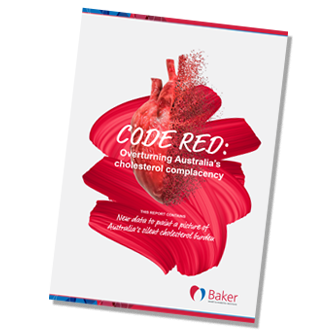
The findings in this report demonstrate a whole of healthcare system response is needed to reform cholesterol management in Australia.
The Baker Institute’s report, Code Red: overturning Australia’s cholesterol complacency, provides analysis of the first new Australian cholesterol data in nearly a decade.
The report examines MedicineInsight data over a ten-year period from 2010 to mid-2019 of 107,664 Australians who have experienced a prior cardiovascular event. This cohort of patients was being managed by GPs from general practice sites from each state and territory in Australia.
The key findings showed:
- 79% of Australians examined as part of this report were prescribed the recommended lipid-lowering therapy.
- But almost half (48%) of high-risk Australians managed in primary care are not meeting the recommended LDL-C targets.
- A higher proportion of those with a sub-optimal LDL-C were women (56%), had cerebrovascular disease (58%), and had a more recent CVD event within the last 5 years (58%).
- Over the past decade, the number of Australians not reaching the treatment targets for LDL-C has remained steady (56% in 2010 compared to 52% in 2019). In any year, LDL-C was higher for women than men.
- New modelling reveals more than 3738 lives could be saved and over 13,740 CVD events prevented over the next five years with optimal cholesterol management.
- Over the next five years, $66.6 million in healthcare costs could be saved with intervention to achieve optimal LDL-C targets.
The findings in Code Red demonstrate a systematic and stepped care approach is needed to reform cholesterol management, in a way that unites the sector — from policy and political decision-makers, to the manufacturers, as well as the patient, clinical, and advocacy communities.