
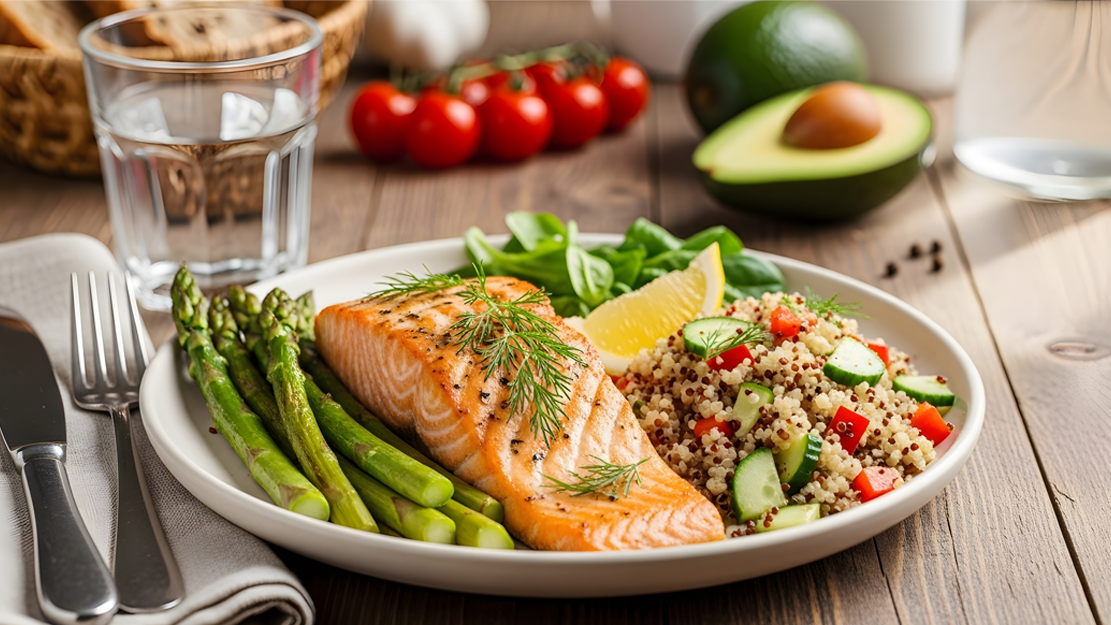
Whether you're managing diabetes, heart disease or working towards a healthier weight, this visual guide makes healthy eating straightforward.
Here's the simple formula: fill half your plate with vegetables, a quarter with lean protein, and a quarter with lower GI carbohydrates. This balanced approach helps manage blood glucose levels, supports heart health and keeps you feeling satisfied.
What you will learn in this fact sheet
This fact sheet provides a simple visual guide to help you build balanced, nutritious meals.
- The ideal balance of vegetables, protein and carbohydrates on your plate.
- Easy portion sizes you can estimate using your hands.
- Practical meal examples to inspire your cooking.
- Tips for portion control at home and when eating out.
The portion plate model
½ of your plate: vegetables or salad
Fill half your plate with cooked or raw vegetables. This provides essential vitamins, minerals and fibre while helping you feel full.
¼ of your plate: lean protein
A quarter of your plate should contain lean protein to support muscle health and keep you satisfied.
¼ of your plate: lower GI carbohydrate
The final quarter contains carbohydrates that release energy slowly and help manage blood glucose levels.
Include small amounts of healthy fats
Add healthy fats for flavour and nutrition.
Portion sizes at a glance
Lower GI carbohydrate — choose one:
- Pasta or noodles: ½–1 cup cooked.
- Rice or grains: ½–⅔ cup cooked.
- Sweet potato: 100–200g.
- Corn: 1 cob or 1 cup kernels.
- Wholegrain bread or flatbread: 1–2 slices, or 1 chapatti or pita.
- Legumes or lentils: ½–1 cup cooked or canned.
Lean protein — choose one:
- Lean meat (beef, lamb, pork): 150g raw or 120g cooked.
- Skinless chicken or turkey: 150g raw or 120g cooked.
- Fish and seafood: 170g raw or 150g cooked.
- Tofu: 170g.
- Eggs: 2 large.
- Legumes or lentils: 1 cup cooked or canned
Vegetables:
- Salad or raw vegetables: 2–3 cups or more.
- Cooked vegetables: 1–1.5 cups or more.
Supporting vital nutrition research
This evidence-based fact sheet was developed by the Baker Heart and Diabetes Institute, where researchers and dietitians have been advancing understanding of nutrition and healthy eating for decades.
Help us continue providing free, expert health resources. Your support enables us to:
- Develop more comprehensive fact sheets like this one.
- Conduct research that informs better nutrition guidance.
- Make evidence-based health information freely accessible to all Australians.
Support our research and free resources
Your donation helps ensure we can continue creating and updating valuable health guides for the community.
Balanced meal examples
These practical examples show how the portion plate model works in everyday meals:
- Chicken, vegetables and rice.
- Spaghetti bolognese with side salad.
- Steak, vegetables and mashed potato.
- Fish, salads and quinoa.
- Tofu, vegetables and noodles.
- Lentil and vegetable salad.
- Roasted vegetable casserole.
- Egg and vegetable omelette with toast.
- Chicken curry with vegetables and chapatti.
- Cheese and salad sandwich.
- Legume, vegetable and pasta soup.
- Meat, salads and rice.
Tips for portion control
- Use the right size plate
aim for plates less than 25cm wide. If your dinner plate is larger, use an entree-size plate instead to help control portions naturally. - Plan your shopping
ensure you have the right balance of ingredients. Bulk up recipes with extra vegetables. - Adapt your favourite recipes
choose a smaller serve and add a side salad to balance the meal. - Eating away from home
use the plate model as a guide when packing lunch or ordering meals at restaurants. - Choose water with meals
stay hydrated and avoid drinks with added sugar.