mRNA therapeutics have rapidly moved into clinical practice in recent years, revolutionising vaccine development and opening new frontiers in treating infectious diseases, cancer, and rare genetic conditions. Yet, cardiometabolic diseases remain largely untapped by this transformative technology, despite being the leading cause of death globally.
The Centre for Cardiometabolic mRNA Therapy was established to address this gap by developing both mRNA-based therapeutics and vaccines for cardiovascular and metabolic diseases. Located in Melbourne, a global hub for mRNA science and industry, the Centre combines complementary expertise in molecular biology, nanotechnology, bioengineering and imaging to move innovations from discovery to clinical application.
Our focus
The Centre is dedicated to harnessing the potential of mRNA to transform the prevention and treatment of cardiometabolic diseases. Our research spans mRNA therapeutics designed for protein replacement in conditions where key cardiovascular or metabolic proteins are deficient or dysfunctional, as well as mRNA vaccines aimed at preventing heart attacks and strokes by targeting disease drivers and reducing harmful inflammation. We pair these therapeutic strategies with precision-engineered nanoparticles that deliver their payload directly to diseased tissues, preventing off-target effects and enabling controlled release where sustained action is required. By integrating targeted delivery, optimised mRNA design, and deep knowledge of cardiometabolic biology, we aim to develop treatments that are both highly effective and exceptionally safe.
Our capabilities
The Centre combines expertise in nanobiotechnology, molecular engineering, and imaging with advanced infrastructure for mRNA design, formulation, and in vivo testing. Our team develops polymeric, lipid-based, and hybrid nanoparticles, engineered for precision delivery of mRNA therapeutics and vaccines. We apply nucleotide replacement strategies during mRNA synthesis to improve stability, reduce immune recognition, and maximise protein expression in target tissues. Our researchers are skilled in bioengineering recombinant antibodies and applying targeted conjugation techniques to direct therapeutic payloads specifically to diseased areas.
Therapeutic performance is evaluated using advanced imaging platforms, including multiphoton microscopy, super-resolution microscopy, MRI, optical, and ultrasound imaging, which enable us to monitor biodistribution and treatment effects in real time. We conduct preclinical studies in unique models of unstable atherosclerosis, myocardial infarction, hypertension, heart failure, fatty liver disease, and diabetes, providing rigorous testing environments for both mRNA therapeutics and vaccines.
Our collaborations
We work with a network of national and international partners whose expertise spans polymer and lipid chemistry, the generation of novel nanoparticles, large-scale clinical-grade mRNA production, advanced imaging, and structural analysis. Collaborators at the University of Melbourne and Monash University contribute to the design and synthesis of new nanoparticle platforms. The University of Tübingen, and the University of Queensland's BASE mRNA facility provide expertise in mRNA construct design and manufacturing at clinical scale. Imaging specialists at Monash University and Heinrich Heine Universität visualise nanoparticles, track their cellular uptake via super-resolution microscopy, and perform in vivo magnetic resonance imaging. Physics specialists at ANSTO determine the composition and structural properties of our nanoparticles through advanced neutron scattering techniques.
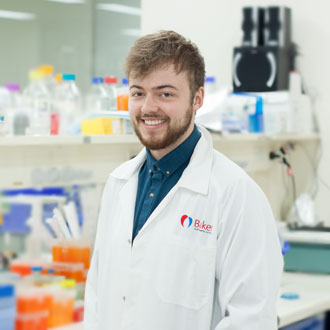
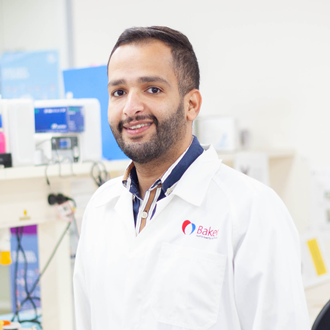
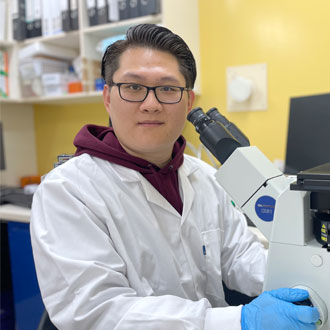
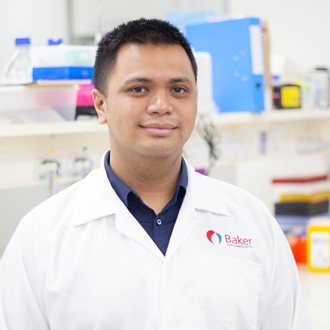
Meet the team
Centre leads
-
-
Our researchers
-

-
-
-

-
-
-
-