
Heart failure is the leading cause of pulmonary hypertension worldwide and is associated with debilitating symptom burden and early mortality. Despite this, the mechanisms driving pulmonary vascular remodelling in this setting remain poorly understood and no targeted therapies exist for Group 2 pulmonary hypertension.
Our lab integrates advanced invasive haemodynamics with translational biology to address this gap. We have performed detailed catheterisation studies in patients with heart failure with preserved ejection fraction (HFpEF) and healthy controls, incorporating exercise haemodynamics and targeted transpulmonary sampling to quantify biomarker gradients across the pulmonary circulation. This work identified twelve key inflammatory and metabolic biomarkers that are selectively upregulated within the pulmonary vascular bed in HFpEF and demonstrated mechanistic links to adverse pulmonary vascular remodelling through correlations with invasive haemodynamic indices.
Organ specific blood sampling
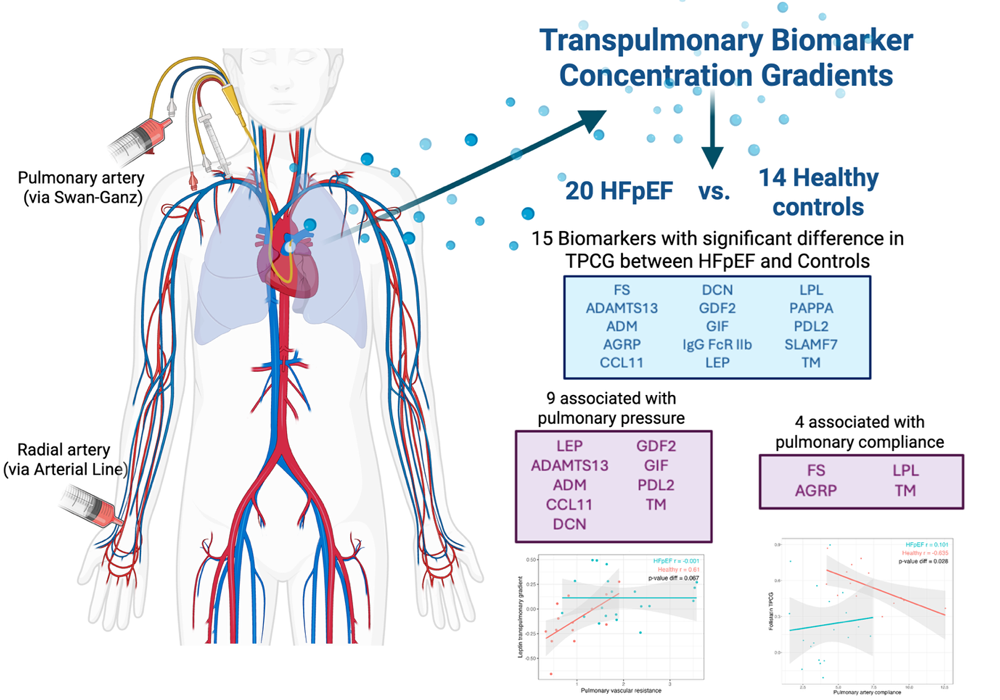
Building on these human data, our ongoing preclinical work explores integrated signalling, proteomic, and histopathologic alterations within the pulmonary vasculature across established murine HFpEF models.
By combining human invasive physiology with mechanistic preclinical modelling, our goal is to define the biological drivers of pulmonary vascular disease in heart failure and accelerate the development of targeted therapies for Group 2 pulmonary hypertension.