
Dr Sarah Turpin-Nolan
PhD, University of Melbourne
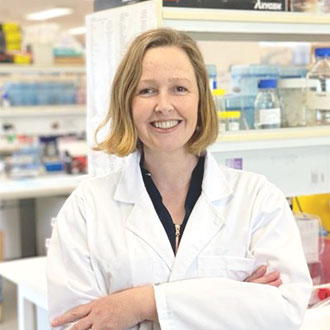
Postdoctoral Researcher
sarah.turpin-nolan@baker.edu.auDr Sarah Turpin-Nolan is a metabolic physiologist whose research investigates how specific lipid species, particularly ceramides, drive metabolic dysfunction, obesity, insulin resistance, and cardiometabolic disease. She works to solve a fundamental question: why do certain lipids become pathogenic, and how can modifying their production or trafficking improve metabolic resilience? By mapping how gut-derived ceramides are synthesised, packaged into chylomicrons, and delivered to peripheral organs, her research aims to translate fundamental lipid biology into new therapeutic strategies that enhance metabolic health.
Her research program combines advanced lipidomics, spatial lipid imaging, metabolic phenotyping, and genetic models to define lipid–tissue interactions with high precision. A major turning point in the field came from her landmark Cell Metabolism (2014) study, which revealed for the first time that CerS6-derived C16:0 ceramides, not total ceramide levels, are the key lipid species driving obesity-induced insulin resistance. This discovery fundamentally reshaped the field by shifting focus away from global ceramide accumulation and toward the specific chain-length–dependent biology of ceramides. The paper has since been cited more than 700 times and established a new conceptual framework that guides therapeutic development internationally.
Building on this foundation, Dr Turpin-Nolan’s senior-author Science Advances (2024) paper identified that high-fat feeding stimulates intestinal C16:0 ceramide production, further pinpointing the gut as a critical source of pathogenic lipids.
Dr Turpin-Nolan’s translational impact spans academia and industry. During her postdoctoral training in Germany, she led a major Sanofi Aventis collaboration generating pivotal preclinical metabolic data. Later, within Professor Mark Febbraio’s group, she contributed essential research enabling Celesta Therapeutics’ investment into next-generation cytokine biologics. As a REDI Fellow embedded at CSL, she strengthened commercial decision-making and therapeutic pipeline development.